


A Comprehensive Examination of the Transformative Global Low-Code Development Platform Industry
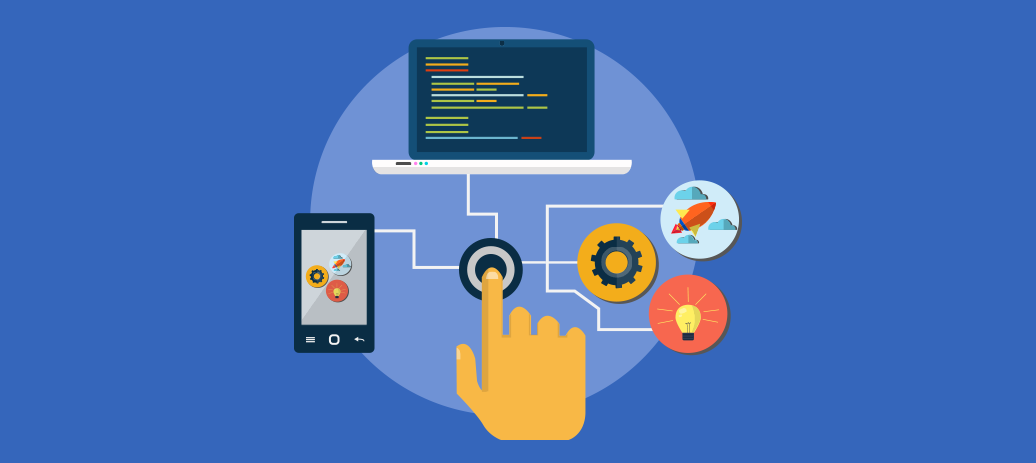
In the relentless pursuit of digital transformation, businesses face a critical bottleneck: the ever-widening gap between the demand for new software applications and the limited capacity of traditional development teams to deliver them. The global Low Code Development Platform industry has emerged as a powerful and strategic response to this challenge, fundamentally reshaping how software is created, deployed, and managed. Low-code development platforms provide a visual, model-driven environment where developers of varying skill levels can build applications using drag-and-drop interfaces, pre-built components, and automated workflows. This approach abstracts away much of the complex, hand-written code, dramatically accelerating the application development lifecycle. By empowering a broader range of creators, including business analysts and tech-savvy employees (often called "citizen developers"), the industry is democratizing software development. It enables organizations to rapidly build and iterate on everything from internal process automation tools and customer-facing mobile apps to complex, mission-critical enterprise systems, fostering unprecedented agility and innovation in a hyper-competitive landscape where speed to market is paramount for survival and success.
The low-code development platform industry is comprised of two primary, interconnected components: the technology platforms themselves and the vibrant ecosystem of services and communities that surround them. The core of the industry is the platform, which serves as an integrated development environment (IDE). These platforms typically feature a visual UI builder for designing responsive web and mobile interfaces, a workflow modeler for mapping out business logic and processes, a data modeler for defining application data structures, and a rich library of pre-built connectors for seamless integration with existing enterprise systems like CRMs, ERPs, and third-party APIs. The second component is the surrounding ecosystem, which is crucial for driving adoption and ensuring customer success. This includes professional services offered by vendors and implementation partners for training, strategic consulting, and co-development. It also features thriving online marketplaces where users can share or sell reusable application components, templates, and connectors, as well as active developer communities that provide support, share best practices, and contribute to the platform's evolution, creating a powerful network effect that strengthens the entire industry.
The competitive landscape of this industry is a dynamic mix of specialized pioneers, enterprise software behemoths, and niche-focused innovators. The pure-play leaders, such as Mendix, OutSystems, and Appian, were instrumental in creating and defining the market. They offer deep, feature-rich platforms designed to handle a wide spectrum of use cases, from simple departmental apps to highly complex, core business systems. Their focus is on providing a high-control, enterprise-grade environment that appeals to both professional developers seeking to accelerate their work and IT departments needing robust governance and scalability. In recent years, major enterprise software giants have entered the fray with formidable offerings, including Microsoft with its Power Platform, Salesforce with its Lightning Platform, and ServiceNow with the Now Platform. These players leverage their massive, entrenched customer bases, integrating low-code capabilities directly into their core business ecosystems and encouraging customers to build custom applications and extensions on top of the platforms they already use, rapidly capturing significant market share within their respective domains. This creates a healthy tension that fuels continuous innovation across the entire industry.
Looking toward the future, the low-code industry is poised for further evolution, driven by the convergence with adjacent technologies and a growing emphasis on enterprise-grade governance. A key trend is the blurring of lines between low-code and no-code. While low-code platforms provide "on-ramps" for custom code to handle complex logic, no-code platforms aim for a purely visual experience. Increasingly, vendors are offering a spectrum of capabilities to cater to users of all skill levels within a single platform. The most transformative trend is the integration of artificial intelligence and machine learning. AI is being used to assist developers by suggesting the next logical step in a workflow, automatically generating data models from spreadsheets, and even testing applications for bugs. This "AI-assisted development" promises to further accelerate the development process and lower the skill barrier for entry. Finally, as the number of citizen developers grows, the industry is doubling down on governance, security, and application lifecycle management (ALM) features, providing IT departments with the sophisticated tools they need to manage, monitor, and secure a proliferating portfolio of low-code applications, ensuring quality and compliance at scale.
Explore Our Latest Trending Reports!
Application Integration Market

 Arabic
 French
 Spanish
 Portuguese
 Deutsch
 Turkish
 Dutch
Dutch
 Italiano
 Russian
 Romaian
 Portuguese (Brazil)
 Greek
Greek