


The Voice of the Market: A Comprehensive and Detailed Sentiment Analytics Market Analysis
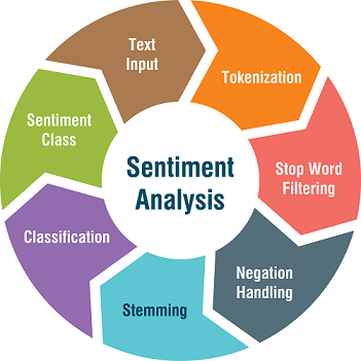
To fully appreciate the strategic value and inherent challenges of opinion mining, a comprehensive Sentiment Analytics Market Analysis using the SWOT framework—Strengths, Weaknesses, Opportunities, and Threats—is essential. This structured analysis provides a balanced perspective on the industry, highlighting the powerful internal strengths that are driving its rapid adoption, the significant weaknesses that can limit its accuracy and reliability, the vast external opportunities for its application in new domains, and the emerging threats that could impact its future growth. Sentiment analytics has become a cornerstone of modern market research and customer experience management, but it is not a perfect science. Understanding the interplay of these factors is crucial for both the vendors creating the technology and the businesses using it to make decisions. This analysis serves as a guide for navigating the landscape, setting realistic expectations, and developing a strategy to maximize the value of this powerful, yet imperfect, technology.
The primary strengths of the sentiment analytics market are its ability to provide real-time, scalable, and cost-effective market intelligence. Its greatest strength is speed. Unlike traditional market research methods like surveys, which can take weeks or months to yield results, sentiment analysis can provide a real-time pulse of public opinion as it unfolds. This allows brands to instantly gauge the reaction to a new product launch or a marketing campaign and make rapid adjustments. Another key strength is scale. The technology can analyze millions of data points from across the globe in a matter of minutes, a scale of analysis that is humanly impossible. This provides a much broader and more representative view of market sentiment than a small focus group ever could. Finally, it is highly cost-effective compared to traditional methods. The cost of subscribing to a sentiment analysis platform is often a fraction of the cost of commissioning a large-scale market research study, democratizing access to market insights for businesses of all sizes.
Despite its strengths, the market has significant and well-documented weaknesses, primarily related to the accuracy and nuance of the analysis. The single biggest weakness is the technology's persistent difficulty in accurately understanding complex human language. Sentiment analysis models still struggle with sarcasm ("I just love waiting on hold for an hour."), irony, and context-dependent language. This can lead to misclassifications and inaccurate results. Another weakness is the challenge of industry-specific jargon and slang. A generic sentiment model might not understand that in the gaming community, "sick" is a positive term. This often requires the models to be customized and retrained with industry-specific data, which can be a complex and time-consuming process. Furthermore, the analysis is often limited to the text data that is publicly available or collected by the company, which may not be representative of the entire customer base, leading to potential sample bias in the results. These accuracy and nuance issues mean that the output of sentiment analysis should often be treated as a strong signal rather than an absolute truth.
The external environment is ripe with opportunities but also presents notable threats. The biggest opportunity lies in the expansion into multimodal sentiment analysis. This involves moving beyond just text to analyze sentiment from voice (tone of voice in call center recordings) and video (facial expressions in customer interviews), providing a much richer and more accurate picture of human emotion. Another major opportunity is the integration of sentiment data with other business data (like sales or operational data) to uncover deeper correlations, for example, understanding how a dip in customer sentiment impacts sales in a specific region. However, the market also faces threats. A primary threat is the growing concern around data privacy and the ethics of scraping and analyzing public data. New regulations and changes in the API policies of social media platforms could restrict access to the data that these systems rely on. Another threat is the potential for manipulation. Malicious actors could use bots to generate large volumes of fake positive or negative sentiment to artificially inflate a brand's reputation or damage a competitor, skewing the results of the analysis and leading to poor business decisions.
Explore Our Latest Trending Reports!
Accounting Professional Service Market


 Arabic
 French
 Portuguese
 Deutsch
 Turkish
 Dutch
Dutch
 Italiano
 Russian
 Romaian
 Portuguese (Brazil)
 Greek
Greek